-0.jpeg?w=500&h=333)
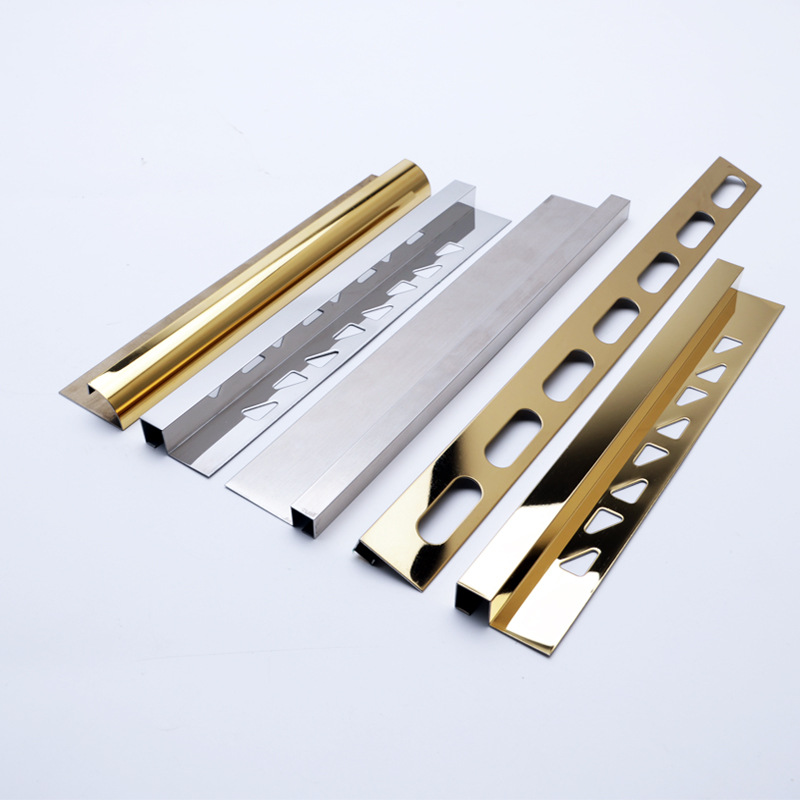
Some of distributors and wholesalers are wonderring what is the difference of stainless steel tile edge profiles between 201 and 304.
Choosing between 201 and 304 isn't just about price—it's about reputation. In high-humidity markets, a 201-grade trim can lead to a 5% product return rate within 6 months. We recommend a 70/30 inventory split for distributors to ensure long-term customer loyalty while maintaining a competitive entry price.
|
Grade |
Salt Spray Resistance (Hours)* |
Recommended Application Environment |
Market Positioning |
|
201
|
24 - 48 Hours |
Strictly dry indoor areas (e.g., bedrooms, office interiors) |
Budget / Price-sensitive |
|
304 |
72 - 120+ Hours |
Kitchens, bathrooms, and general high-end residential |
Best Seller (Standard) |
|
316 |
200+ Hours |
Coastal regions, swimming pools, and high-moisture outdoor areas |
Premium / Project-specific |
This table is designed to help your sales team match the right product to your local market climate, reducing post-sale return rates.

- Avoid the "201-in-Bathroom" Trap:Using 201-grade trims in high-moisture areas like bathrooms or near windows is the #1 cause of distributor complaints. We advise stocking 304-grade for all residential projects to protect your reputation.
- The "Coastal" Factor:If your distribution area is within 5km of the coastline, 316-grade is not just an option—it is an investment in preventing long-term warranty claims.
- Customization:Don't see your regional climate requirements here? Send us the local humidity data, and we will provide a specialized corrosion-resistance assessment for your target market.
Inventory liquidity is the lifeblood of distribution. We’ve analyzed current market data to identify the top 5 'High-Rotation' profiles. By stocking these, you optimize your warehouse space and maximize capital turnover.
Pro-Tips for Your Sales Team
Q1: Why does 304-grade stainless steel sometimes show "brown spots" in a brand-new bathroom?
It’s rarely the steel itself. It’s usually "surface contamination" from steel wool, iron filings from nearby drilling, or aggressive chemical cleaning agents used during final site cleanup.
Pro-Tip: Recommend using a neutral pH cleaner and avoiding any abrasive scrubbing pads.
Q2: My client wants the cheapest trim possible. Can I use 201-grade for everything?
Only if the project is strictly in a climate-controlled, dry environment. In high-moisture zones (bathrooms/kitchens), 201-grade is a ticking time bomb. The short-term price saving will be completely erased by the long-term cost of replacing rusted trims and repairing the tiles around them.
Q3: How do I explain the price gap between your stainless steel trim and local aluminum alternatives?
Aluminum is prone to bending, scratching, and oxidation over time. Stainless steel is a structural material—it holds its shape, retains its original finish for decades, and signals "high-end luxury" to the end-user. It’s an investment in the home's resale value.
Q4: What’s the secret to a perfect corner junction with your trim?
Consistency is key. Our profiles are engineered for precise 45-degree miter cuts. If your contractors are struggling, suggest using a magnetic miter box or our matching corner caps, which drastically reduce installation labor costs.